Originally published – 12 May, 2026
Budget Response – Key Points
● Australia has protected the core of its aid program during a period of global aid cuts and rising instability.
● Australian aid remains less than 1% of the Federal Budget – around 63 cents in every $100 spent.
● Aid supports Australia’s security and prosperity through pandemic prevention, regional stability, labour mobility,
and crisis prevention.
● Australia already spends over 10 times more on defence than aid.
● Recent YouGov polling found 74% of Australians support maintaining or increasing aid.
● Safer World for All continues to support the restoration of aid toward 1% of the Federal Budget.
_________________________________________________________________
The Safer World for All campaign has welcomed the Albanese Government’s decision to protect Australia’s aid program at a time of deep international aid cuts and rising global instability.
“At a time when global aid is going backwards, Australia holding the line matters,” Micah Australia National Director Matt Darvas said.
“Across the world we are seeing rising conflict, humanitarian need, and major aid retrenchment, including devastating cuts to U.S. overseas assistance programs.
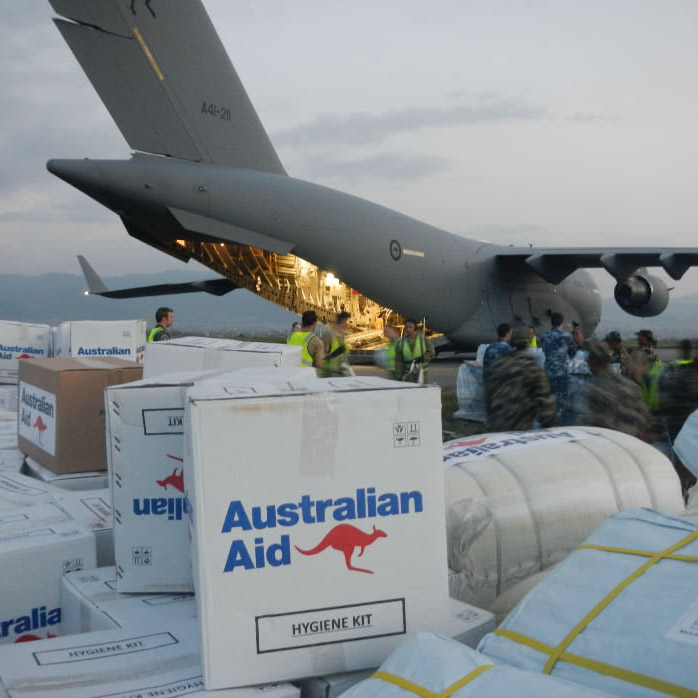
“In this environment, Australia’s decision to protect aid sends an important message to our region and to vulnerable communities that Australia will continue to show up.”
Tonight’s Budget shows Australia’s Official Development Assistance (ODA) will increase slightly to $5.209 billion in 2026–27, including an additional $112 million through indexation, with the Pacific and Southeast Asia remaining central priorities.
Mr Darvas said the current global environment made cross-partisan support for Australian aid increasingly important.
“We acknowledge those from across the political spectrum who continue to support Australia playing a constructive role in our region and world,” he said.
Safer World for All said it would continue working to build broad public support for Australian aid through its “modern case for aid” framework.
The campaign said support was growing not only among faith communities, diaspora leaders, and younger Australians, but also from voices across business, security, health, and civil society who see Australian aid as a practical investment instability and crisis prevention.
It said Australians increasingly understood that investing early in stability and development helps prevent far larger and more costly crises later.
“Australian aid saves lives, helps prevent crises, and makes our world – and Australia – safer for all,” Mr Darvas said.
Examples include:
- strengthening regional health systems and disease surveillance to reduce the risk of future pandemics reaching Australia
- supporting Pacific labour mobility that helps sustain Australia’s farming and aged care workforce
- helping stabilise fragile contexts like Myanmar, where escalating crisis is contributing to trafficking networks and scam compounds on the Thai–Myanmar border that are already targeting Australians
Roslyn Dundas, Director of Policy and Advocacy at the Australian Council for International Development (ACFID), said Australians remained generous in their support for international aid and were often surprised to learn how small the Government’s aid budget actually is.
“Recent YouGov polling found 74% of Australians support maintaining or increasing Australia’s aid program,” she said.
“That matters because Australians increasingly recognise aid as a practical investment in regional stability and security.
“We also know that every additional dollar invested in peacebuilding in fragile and conflict-affected countries can save up to $16 in future conflict costs.”
Mr Darvas said effective security required both defence and long-term investment in prevention.
“For every $100 in the Federal Budget, Australia currently spends around $7 on defence and around 63 cents on aid,” Mr Darvas said.
“Australia already has one of the widest defence-to-aid ratios in the developed world.”
“Defence responds to threats. Aid helps reduce the conditions that allow threats to emerge in the first place.”
At the same time, Safer World for All said the Budget did not resolve the longer-term pressures facing Australia’s aid program.
“Australia’s aid generosity remains around 0.17% of Gross National Income (GNI), among the lowest levels in the OECD,” Mr Darvas said.
“We recognise the very real fiscal pressures facing Government.”
“But while this Budget protected aid from cuts, growth remains below CPI, placing ongoing pressure on the program’s ability to save lives and strengthen stability in our region.”
“Over time, Australia can responsibly restore aid toward 1% of the Federal Budget – a modest and achievable benchmark that would still leave 99% of spending focused here at home.”
“Importantly, governments of both major parties have maintained aid above this level in recent decades, including the Howard Government, which left office with aid at 1.12% of the Federal Budget.”
“Ultimately, Australia does better when our region and our world are more stable, healthy, and secure.”
Background Notes
Key supporting resources and analysis:
● BRIEFING: Protect Australian Aid This Budget (April 2025)
● The Modern Case for Australian Aid (September 2025)
Media Contact:
Matt Darvas – National Director, Micah Australia
0416 280 340